
Insurance has always been a relationship business. But for most insurers, that relationship is tested hardest not during the sale, but during a claim. The policy document sits in a drawer until the moment a customer needs it most, and what happens next determines whether they renew, recommend, or leave. Yet for many organisations, the communication infrastructure around claims remains reactive, fragmented, and stubbornly manual.
The good news is that this is changing quickly. AI-driven communication platforms are giving insurers the ability to move from reactive document generation to proactive, personalised, omnichannel customer journeys throughout the entire claims lifecycle. The shift is not just operational. It is commercial.
The Problem with How Most Insurers Communicate Through Claims
Most claims communication today is built around documents rather than conversations. An acknowledgement letter is generated and sent. A decision letter follows weeks later. If something goes wrong in between, the customer calls. If the call centre is busy, the customer calls again. By the time the claim is settled, the customer has had several frustrating interactions and has formed a view of the insurer that no marketing campaign can easily undo.
The underlying problem is structural. Communication at most insurers is handled by systems designed for batch output, not real-time orchestration. The template library is maintained by IT. Channel options are limited to what the legacy platform supports. And the data required to personalise a communication sits in a separate CRM or policy administration system that was never designed to talk to the output management layer.
The result is communication that is technically compliant but emotionally disconnected. It tells the customer what has happened without anticipating what they need to know next. It arrives by post when the customer checks email. It uses language approved by legal that no ordinary person would use in a conversation.
The claims moment is when the promise of a policy is either kept or broken. How you communicate through that moment determines more than a single claim outcome.
Where AI Changes the Equation
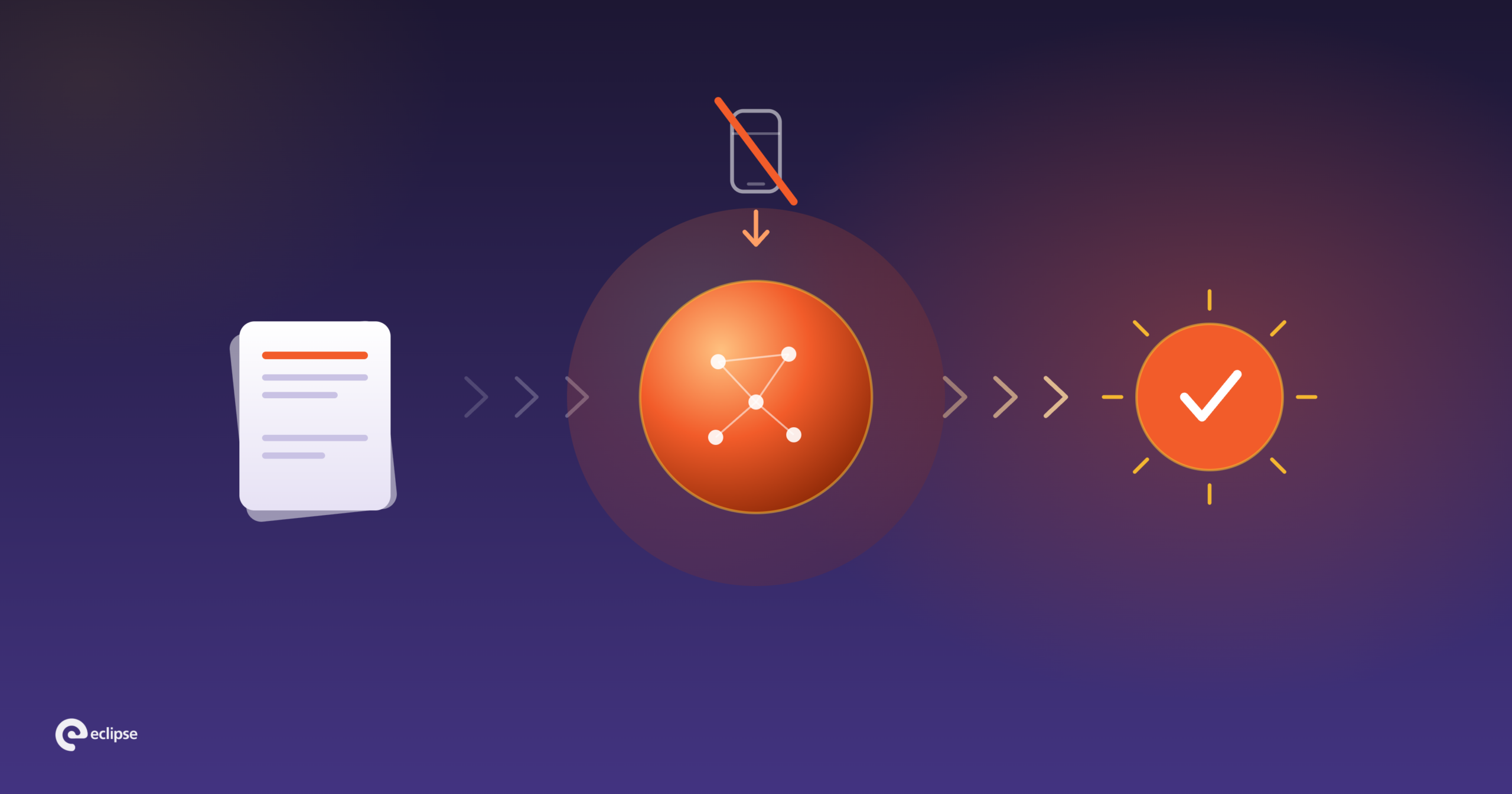
AI-driven communication does not replace human judgment in claims handling. What it does is remove the gap between what the claims system knows and what the customer hears. When a claim is logged, updated, or settled, that event can now trigger an intelligent communication automatically, personalised to that customer, delivered via their preferred channel, and written in language that reflects where they are in their journey.
For a customer who has just had a car accident, that might mean an immediate SMS acknowledgement while they are still at the roadside, followed by a WhatsApp message with a direct link to upload photos, followed by an email summarising next steps once the claim is registered. None of that requires a human to compose each message. All of it requires a platform that can connect real-time claims data to a communication engine capable of orchestrating across channels.
Eclipse CCMaaS does this through a combination of scenario management and a Canonical Data Model. The data model normalises information from policy administration systems, CRMs, and claims platforms into a single, enriched layer that the communication engine can access at the point of generating each message. The scenario management layer, which is set up and controlled entirely by business users, then automatically determines what to send, when, and how, based on the event that has occurred and the customer’s known preferences. In other words, the technology executes the communication, but the rules it follows are always defined and owned by a person.
Compliance Is Not Optional in Insurance Communication
One of the things that makes insurance communication uniquely challenging is the regulatory environment. Every customer-facing document touches on contractual obligations, regulated disclosures, and often vulnerable customer considerations. Personalisation is desirable, but not if it introduces compliance risk.
This is exactly where many AI communication projects stall. Insurers want to personalise, but their legal and compliance teams are understandably cautious about AI generating free-form text that has not been reviewed and approved. The resolution is not to abandon personalisation, but to design the system so that personalisation happens within a framework of approved content.
Eclipse’s approach uses master templates and conditional text blocks that are reviewed and signed off by compliance teams in advance. AI-driven communication then assembles the right approved templates for each customer context, rather than generating new text from scratch. The customer receives a message that feels personal and relevant. The compliance team knows that every word in that message came from an approved library. And the audit trail is complete, traceable, and available in real time via the management dashboard.
Eclipse CCMaaS is certified to ISO 27001, SOC2 Type 2, GDPR, and FSQS-NL. These are not certifications that clients need to achieve on top of the platform. They are native to it, meaning every communication that flows through Eclipse inherits those compliance properties automatically.
Personalisation and compliance are not competing objectives in a well-designed CCM platform. They are the same objective, achieved through the same architecture.
The Contact Centre Relationship
There is a direct and measurable connection between the quality of proactive communication and the volume of inbound contact centre calls. When customers know what is happening with their claim, when they receive updates at the moments that matter, and when those updates arrive via the channels they actually use, they do not need to call.
Insurers who have moved to proactive, AI-orchestrated claims communication consistently report significant reductions in avoidable inbound contact. The contact centre does not disappear. But it shifts from handling basic status queries to handling the genuinely complex interactions that require human judgment, which is where it adds the most value.
The commercial case is straightforward. Every avoidable call costs money. Every call that is replaced by a well-timed, informative proactive message is a cost reduction that also improves the customer experience. The two objectives, lower cost and higher satisfaction, align in a way that is rare in insurance operations.
Beyond Claims: The Whole Policy Lifecycle
The same architecture that transforms claims communication can be applied across the entire insurance customer lifecycle. Renewal communications that carry contextual, data-driven prompts based on a customer’s product usage. Onboarding sequences that guide a new policyholder through their cover in the channels they prefer. Mid-term adjustment confirmations that are generated and delivered automatically when a change is made to a policy.
Eclipse CCMaaS includes more than thirty pre-built communication scenario modules that cover the full range of customer events. Insurers do not need to build these from scratch. They configure and deploy on top of an architecture that has already been proven at scale, by organisations like Vattenfall, PostNL, and the Dutch Social Insurance Bank, processing hundreds of millions of communications per year.
The question for insurance communicators in 2026 is not whether AI-driven communication is relevant to their business. It is whether they have a platform capable of delivering it at the scale and compliance standard their customers and regulators expect. You can also read more about how the Eclipse CCMaaS model works in practice, or explore how Eclipse has been recognised by Aspire as a leader in scalable CCM.
Ready to See What CCMaaS Looks Like at Scale?
Book a personalised demo with the Eclipse team and explore what’s possible for your organisation.