How Intelligent CCM Is Transforming Enterprise Communication at Scale


Wednesday, Jul 29th 2026

There is a clear shift happening in enterprise communications. Organisations are moving away from thinking only in terms of documents and channels, and towards communication as an orchestrated, data-driven service.

That shift is one reason intelligent CCM is gaining attention.

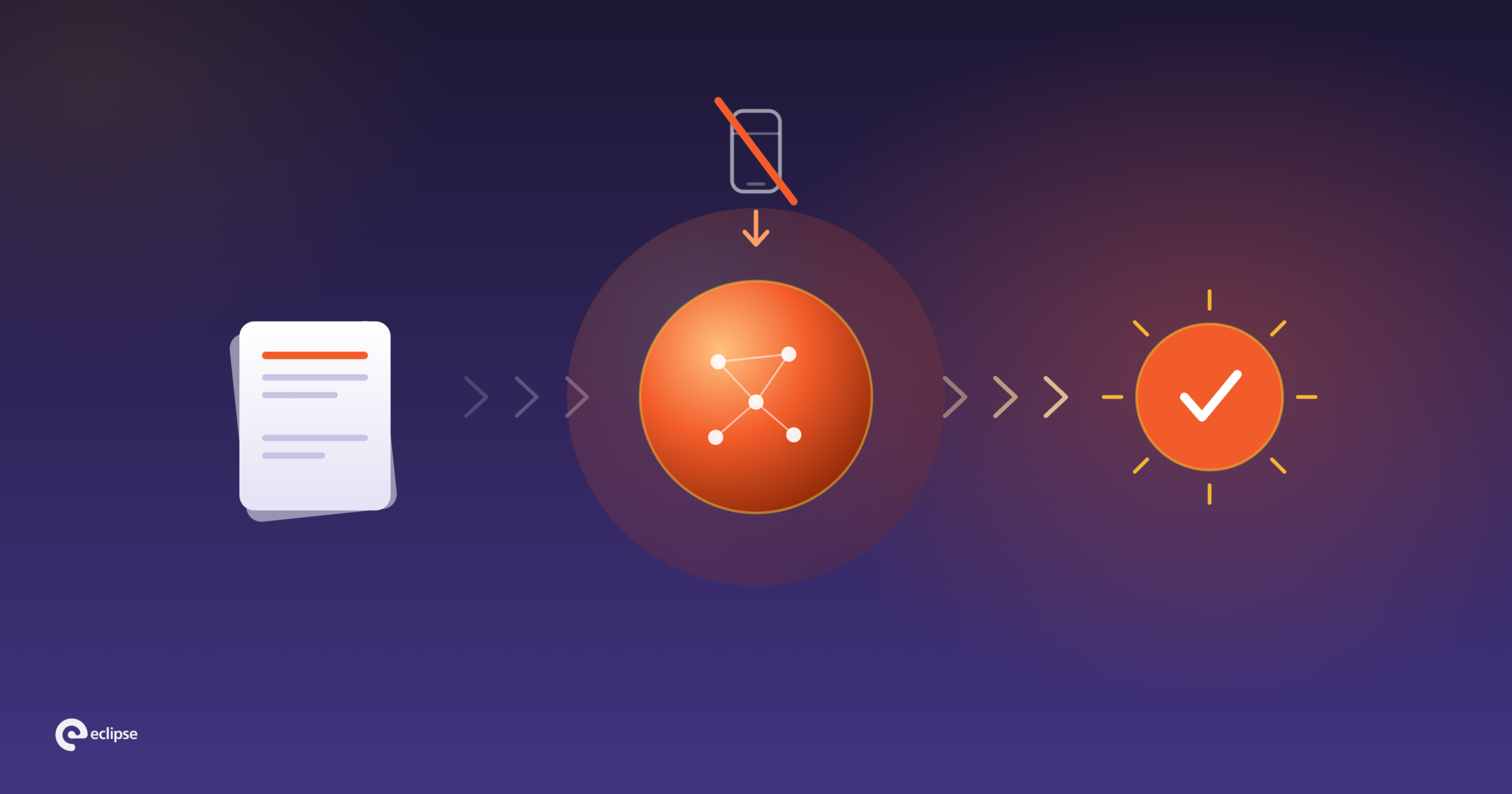
The phrase is sometimes used too loosely. In practice, intelligent CCM is not simply traditional CCM with AI added on top. It is a more adaptive communication model that combines automation, business rules, operational data, journey logic and, where appropriate, AI-assisted capabilities to improve how communications are created, delivered and governed.

The important phrase there is where appropriate. In enterprise settings, especially in regulated sectors, intelligence is useful only when it improves control as well as speed.

What intelligent CCM actually means

A practical definition is this: intelligent CCM uses structured data, workflow logic, reusable content and selective AI support to make enterprise communications more timely, relevant, manageable and measurable.

That can include dynamic content selection based on customer context, event-driven triggers from business systems, automated routing to the right channel, content reuse across journeys and brands, AI-assisted drafting or classification, and monitoring that helps teams understand what is working and what is failing.

The objective is not to automate everything. It is to reduce avoidable manual effort while improving consistency, responsiveness and oversight.

Why enterprises are rethinking the model now

Three pressures are pushing in the same direction.

First, customers increasingly expect communication that feels timely, human and connected to the issue they are dealing with. Static documents still matter, but in many life stages they are no longer enough on their own. Organisations are being judged on whether they can explain, guide and reassure rather than simply issue notices.

Second, many communication estates are still fragmented. It is common to find a mix of legacy composition tools, line-of-business templates, print workflows, email tools, portal messaging and outsourced production arrangements. That makes change slow and governance inconsistent.

Third, the European operating environment is tightening. Accessibility, resilience, privacy, digital identity and AI governance are all pushing enterprises towards communication models that are more disciplined, more transparent and easier to defend.

From document-first to dialogue-aware communication

One of the most useful ways to understand intelligent CCM is to see it as a move beyond a document-first mindset. Traditional CCM has been excellent at producing regulated letters, statements, policies and formal notices. Those outputs still matter. But enterprise communication now stretches further.

A customer may begin with a search result or campaign, move into onboarding, receive statements and service notifications, ask for help through a portal or contact centre, and then complete a payment or signature process digitally. In that context, the communication platform is not sitting at the end of the process. It is active throughout the lifecycle.

Intelligent CCM supports that shift by linking composition with orchestration, channel choice, journey state and response handling. It helps the business decide not only what to say, but when to say it, in what format, through which channel and with what follow-up.

The strongest use cases are often operational

The most practical applications of intelligent CCM are not always the flashiest ones.

Smarter content assembly

Instead of maintaining hundreds of near-duplicate templates, organisations can manage approved content blocks and assemble communications dynamically based on product, jurisdiction, customer status or event type. That reduces maintenance effort and improves consistency.

Better exception handling

When a process fails or a journey changes unexpectedly, intelligent workflows can trigger the right communication path more quickly. That reduces silence, confusion and avoidable inbound contact.

Assisted drafting for specialist teams

AI can help generate first drafts, summaries or suggested wording for internal review in cases where teams handle high volumes of similar but not identical communications. Used carefully, that speeds preparation without removing human accountability.

Improved inbound-outbound continuity

Communication history, case context and next actions can be linked more clearly, so the organisation responds with awareness rather than restarting the conversation from scratch.

Intelligence depends on architecture, not only features

This is where many programmes succeed or fail. Intelligent CCM is difficult to sustain if the underlying architecture is brittle.

A mature model usually combines several layers: business-system integration, data normalisation, workflow and orchestration, controlled content services, composition, omnichannel delivery, archive and feedback loops. Increasingly, organisations are also exploring AI services around content intelligence, classification and service support. But those capabilities only work well when the basics are stable.

In other words, intelligence is not a bolt-on. It depends on an operating architecture that can connect data, content, rules and delivery without creating a maze of hard-coded dependencies.

Where AI genuinely helps, and where it does not

AI has a role in intelligent CCM, but it needs boundaries.

It can help with classification, summarisation, suggestion generation, translation support, content tagging and detection of anomalies or missing information. It may also support service teams by surfacing relevant communication history or recommending the next communication step.

But AI is not always a substitute for communication governance. In regulated environments, organisations still need controlled templates, approval frameworks, privacy safeguards, auditability and clear accountability for what is sent to customers. A generated paragraph is only useful if the organisation can trust the process around it.

This is why human oversight has become central to serious intelligent-CCM discussions. Review workflows, escalation paths, role-based permissions and policy controls need to sit alongside any AI-assisted capability. Otherwise the organisation gains speed at the cost of confidence.

What a more mature model looks like

Organisations that get this right tend to share a few habits. They standardise content where possible. They define which decisions can be automated and which require review. They align communication triggers with real business events. They separate experimentation from production control. They make accessibility, privacy and auditability part of design instead of retrofitting them later.

They also recognise that not every journey needs the same level of sophistication. A payment reminder, a claims update, a contract amendment and a vulnerable-customer service message should not all be handled with identical logic. Intelligent CCM is strongest when it respects those differences rather than flattening everything into one automation model.

Why managed services are becoming more attractive

As communication environments become more complex, many organisations realise they do not just need a better platform. They need a more sustainable operating model.

That is one reason managed communication services and CCM-as-a-service approaches are becoming more attractive. They can help reduce operational complexity, give access to specialist expertise, improve continuity and create a more disciplined change process without forcing the enterprise to carry the full burden internally.

For organisations balancing legacy systems, compliance demands and limited in-house capacity, that can be a practical route to progress. The goal is not outsourcing for its own sake. It is creating an environment where innovation does not collapse under day-to-day maintenance pressure.

The Netherlands and European context

In the Netherlands and across Europe, several forces are making this conversation more urgent. Organisations are modernising core systems, moving more communication workloads to cloud-based services, responding to accessibility and resilience requirements, and looking more seriously at digital identity, trust services and AI-enabled process improvement.

That mix of pressures makes intelligent CCM relevant well beyond marketing. It touches operational communications, service journeys, regulated notices, onboarding flows, payments, signatures and document access. In short, it reaches into the part of the business where communication quality and operational quality become hard to separate.

Where Eclipse fits

Eclipse can support organisations that want to modernise communications without turning the programme into a theory exercise. That may involve assessing the current environment, simplifying fragmented processes, improving content and template governance, introducing AI-assisted capabilities with appropriate oversight, or moving towards a managed model that reduces operational drag.

Intelligent CCM is transforming enterprise communication at scale, but the transformation is not really about adding more intelligence for its own sake. It is about creating communications that are more relevant, more resilient, more human in the right moments and easier to govern.

For most enterprises, that is the real breakthrough.

Beyond Boundaries: How CRM Integration with CCM Platforms Empowers the Enterprise


Tuesday, Jul 21st 2026

Many organisations have invested heavily in CRM. They hold customer records, service cases and interaction histories. Yet when an important communication goes out, the experience can still feel disconnected.

A service adviser cannot see the exact letter the customer received. A collections team sends a reminder that ignores the latest case update. A sales team promises continuity, but onboarding messages come from another system, with different data and rules.

This is the gap between customer data and customer communication.

CRM integration with CCM closes that gap. It connects the system that knows the customer with the platform that composes, governs and delivers communications, with direct consequences for service quality, compliance and customer trust.

Why this matters now

Customer expectations have shifted towards continuity. People do not split sales, service, billing and compliance messages the way organisations do internally. They experience one brand. When messages feel inconsistent, late or repetitive, the relationship suffers.

This matters most where communication is the service. In insurance, claims updates and policy changes shape trust. In utilities, outage and billing notices drive complaint volumes. In financial services, renewal notices, payment reminders and account updates are the clearest signal of operational competence.

A CRM gives business context, but it does not deliver governed enterprise communications. Most CRM systems track interactions and trigger workflow well. Few are built for template governance, multilingual correspondence, accessibility, archiving and high-volume output across print and digital channels.

CRM and CCM do different jobs

It helps to be precise about the division of labour.

CRM is the system of engagement and context. It holds customer and case data, preferences, ownership, service status and interaction history, and supports front-office decisions about what happens next.

CCM is the system of controlled communication execution. It manages approved templates, business rules, content assembly, formatting, delivery, channel logic, audit trails and output. It turns business events and data into communications that are consistent, traceable and fit for purpose.

Integrate the two properly and the organisation moves from generic outbound messaging to communication that reflects the real state of the relationship. That is where the value starts.

We break this relationship down further in our article on how a CCM platform relates to tools such as CRM and marketing automation.

The real benefits of integration

  1. Better service continuity. Teams see what was sent, when and in what context, so calls, complaints and vulnerable-customer cases are handled with confidence.
  2. More accurate personalisation. Messages reflect live context: an open dispute, a recent service issue, the customer’s actual claim stage, not yesterday’s batch.
  3. Stronger governance. Version control, legal wording approval, multilingual variants, accessible output, archive rules and evidence of what was sent.
  4. Less manual work. No more copying data into templates, producing ad hoc letters or reconciling histories by hand, which also cuts avoidable errors.

The shift from document handling to communication orchestration

CRM and CCM integration moves the organisation beyond isolated document production. The communication layer becomes part of a broader service model that connects data, workflow, content and delivery.

Enterprises no longer deal with one channel and one document type. A single journey may involve a secure message, an email summary, a formal PDF, an SMS prompt, an agent conversation and a portal update. The challenge is not sending more messages, but keeping them coherent.

The platform is no longer just a formatting engine at the end of a process. It becomes part of the value chain, from orchestration through composition, delivery and archive.

Integration is not just a technical exercise

Too many CRM-CCM projects are framed as connector work. In reality, the operating model matters just as much as the APIs.

It should answer practical business questions. Which communications fire from CRM events, and which start elsewhere? Which system owns each critical data field? Who approves template changes? How are exceptions and delivery failures handled?

These answers shape the result. A technically successful integration still creates confusion if ownership and governance stay vague.

Where the value is highest

Customer onboarding

Welcome packs, policy documents and account confirmations can reflect live CRM context while using controlled content, reducing friction in the costly first weeks.

Service and case management

Complaint acknowledgements, claim updates and service notices stay consistent when the trigger sits by the case workflow and the content sits in a governed platform.

Collections and payment journeys

Reminder sequences work better when they reflect open disputes, vulnerability markers or partial-payment arrangements. This is the clearest case for live context.

Renewal and retention

Renewal messages can align with recent interactions, service history and preferences instead of running as generic annual output.

The European and regulated-enterprise angle

In financial services, insurance, pensions, utilities and other regulated sectors, the communication layer carries obligations beyond convenience. Messages may need to be retained, accessible, auditable and appropriate to the channel, and policy wording is often legally sensitive.

This is why CRM-native messaging is not always enough. It can be fast, but it rarely provides the controls large enterprises need across jurisdictions, languages and business lines.

The Netherlands and the wider European market add their own pressures: accessibility expectations, digital identity developments and resilience requirements. Here, communication quality maps directly to operational maturity.

Common mistakes to avoid

First, do not overload CRM with document logic that belongs in CCM. It makes change harder and weakens governance.

Second, do not integrate only for outbound triggers while ignoring inbound visibility. If agents cannot see communication history, the service gain is limited.

Third, do not assume more personalisation is always better. Relevance beats novelty, and too much data makes messages harder to manage and explain.

Fourth, do not neglect content governance. If data is connected but wording stays fragmented across teams, the customer still gets an uneven experience.

Why managed services can accelerate the result

Many organisations know the destination but struggle with the path: inherited templates, limited specialist capacity and multiple business owners. Managed communication services reduce that complexity and bring specialist governance, tooling and process discipline into the environment.

The value is not only cost. It comes from continuity, faster change management, less dependency on fragile workarounds and a clearer route to modernisation.

The architecture question is becoming more important

As organisations modernise, CRM and CCM integration is often one part of a wider architectural change. Legacy estates are tightly coupled and document-centric. Newer models are modular, using integration layers, workflow services, content services and delivery gateways so communication is easy to change.

That shift matters because the requirement is changing. Enterprises must support formal documents, digital messages, conversational service and customer-controlled journeys in one landscape, and rigid point-to-point models buckle fast.

This does not mean every organisation needs a major platform replacement. It does mean the integration should be designed for future communication needs, not just today’s trigger list.

Where Eclipse fits

Eclipse helps enterprises define a workable operating model between CRM and CCM, find the right integration points, simplify legacy communication processes and improve how history, templates and delivery controls are managed.

That might mean platform integration, content governance, managed communication services or a phased modernisation programme. The right model depends on your CRM estate, communication volumes, risk profile, language complexity and internal capacity.

CRM tells you what is happening in the relationship. CCM helps you communicate it clearly, consistently and at scale. When the two work together, the organisation does not just send better messages. It becomes easier to run, easier to govern and easier for customers to deal with.

Ready to See What CCMaaS Looks Like at Scale?

Book a personalised demo with the Eclipse team and explore what’s possible for your organisation.

Request a Demo

Mastering Peak Loads with Scalable CCM


Thursday, Jul 16th 2026

Peak-load communication problems rarely announce themselves politely. They arrive all at once: a billing run, a policy renewal wave, a regulatory update, a claims event, a payment reminder cycle, a product recall, or a year-end statement campaign. What looked manageable in test conditions quickly turns into queues, delays, manual workarounds and anxious business teams.

This is where CCM scalability stops being a technical detail and becomes an operational requirement.

For large enterprises, customer communications are not just outbound documents. They are a mix of batch output, triggered messages, digital notifications, archive obligations, accessibility requirements and service-level commitments. When volumes spike, the real question is not whether messages can be generated. It is whether they can be generated, personalised, routed, delivered and tracked without losing quality or governance.

A modern CCM Platform environment should be built for uneven demand. That matters even more in Europe, where organisations often have to balance multilingual communications, accessibility, privacy, auditability and channel choice at the same time. The regulatory context is also getting stricter. The European Accessibility Act took effect on 28 June 2025, and financial institutions are working within a more formal resilience framework under DORA.

Why peak-load pressure exposes weak CCM design

Many legacy communication environments appear stable during normal operations because they were designed around predictable batch cycles. The problem shows up when the pattern changes.

A severe weather event can trigger a flood of claims correspondence. A tariff change can create a sudden rise in billing messages. A service interruption can push millions of proactive updates through print and digital channels in a narrow time window. In those moments, the bottleneck is rarely one thing. It is usually the combination of template sprawl, tightly coupled integrations, limited orchestration, manual approval steps and infrastructure that scales badly.

When organisations say they have a capacity issue, they often mean one of five things: composition engines slow down under volume, dependencies on upstream systems delay data intake, output management cannot prioritise critical communications, print and digital channels are managed separately, or monitoring is too limited to spot failure early.

What scalable CCM actually looks like

Scalable CCM is not just higher throughput. It is the ability to absorb variation without losing control.

In practice, that means a platform and operating model that can:

  1. separate the data, composition and delivery layers;
  2. scale processing capacity up and down during peak events;
  3. support both batch and on-demand flows;
  4. maintain version control, audit trails and approval governance;
  5. distribute output across print, email, SMS, portals and other digital endpoints; and
  6. monitor failures, retries and delivery status in near real time.

That is a different design philosophy from the traditional document factory approach. It recognises that peak loads are not exceptions. They are part of normal enterprise reality.

The hidden cost of coping mechanisms

Many organisations already handle peaks, but only by relying on effort rather than design.

Operations teams postpone lower-priority jobs. IT adds temporary scripts. Business users duplicate templates to speed approvals. Print providers are asked to absorb last-minute volume changes. Support teams field avoidable inbound calls because outbound communications were delayed or unclear.

The process may survive, but the business pays for it elsewhere: overtime, rework, complaint handling, missed SLAs and reduced trust. A communication peak is precisely the moment when inconsistency becomes visible.

Designing for resilience, not just capacity

A better approach starts with workload design.

Not every communication needs the same treatment. A scalable CCM model should distinguish between business-critical and routine output, event-driven and scheduled communications, legally required and marketing-oriented messages, and high-volume standard templates versus specialist low-volume content.

Once those categories are clear, organisations can build routing, prioritisation and fallback rules around them. That may include separate queues, elastic processing, template standardisation, output throttling and defined degradation paths. For example, if one channel becomes constrained, non-critical messages may be delayed while essential notices continue.

Cloud helps, but only if the architecture is right

Cloud migration is often presented as the answer to scalability. Sometimes it is. Sometimes it simply moves the same problems into a hosted environment.

Cloud-based CCM can improve elasticity, deployment speed and operational visibility. It can also reduce the burden of maintaining ageing infrastructure. But those gains depend on platform choices, integration patterns, data readiness and governance maturity.

If templates are unmanaged, approval paths are unclear and upstream data is inconsistent, cloud alone will not create scalable communications. It will only expose the shortcomings faster.

Accessibility and quality cannot be sacrificed under pressure

One of the most common mistakes during peak events is to focus narrowly on throughput. That creates another risk: communications are sent on time, but they become harder to understand, harder to access or harder to defend.

In practical terms, scalable CCM should support quality at scale through reusable accessible templates, controlled content blocks, automated validation and clear exception handling. Speed without readability is not communication maturity.

Where Eclipse fits

For many enterprises, the hardest part is not recognising the problem. It is finding a realistic route from a fragile legacy environment to a more resilient one.

That route may involve platform modernisation, managed communication services, operational redesign or a staged shift towards CCM-as-a-service. The right answer depends on communication volumes, existing integrations, channel mix, regulatory obligations and internal team capacity.

Eclipse can support that journey in a pragmatic way: assessing the current environment, identifying operational and technical bottlenecks, reducing template and process complexity, and helping organisations build a communication landscape that performs reliably when demand is uneven.

But the value does not end once the migration is complete. The same modern CCM platform that carries an organisation through the transition then becomes the foundation for a more sustainable way of working. With centrally managed templates, built-in governance, elastic processing and unified control across print and digital channels, teams can keep communications consistent, compliant and accessible long after go-live, without falling back on manual workarounds every time volumes spike. In short, Eclipse pairs migration and consulting with a platform that keeps CCM scalable and resilient over time, not just during the initial project.

Peak loads are not just a scale test. They are a trust test. Enterprises that handle them well protect service quality, reduce avoidable cost and create a more stable foundation for future transformation.

Ready to See What CCMaaS Looks Like at Scale?

Book a personalised demo with the Eclipse team and explore what’s possible for your organisation.

Request a Demo

26 Communication Trends for 2026 That Every Business Should Know


Monday, Jul 13th 2026

The way organisations communicate with their customers is changing faster than at any point in the past decade. Shifting customer expectations, regulatory pressure, new channel behaviours, and a genuine rethinking of what good communication looks like are all converging at once.

We have pulled together 26 of the most important communication trends shaping 2026 to help you understand what is changing, what it means for your organisation, and where the real opportunities lie. Eclipse Group processed more than 700 million communications in 2025. These trends are not theoretical for us. We see them in live client environments every day.

Omnichannel and Channel Strategy

1. Omnichannel Is Now the Operating Model, Not the Goal

Omnichannel customer engagement is no longer a strategic aspiration. Organisations that have not yet built a coherent omnichannel capability are already behind. Customers expect to move between channels without friction, and they expect the organisation to remember where the conversation left off. Eclipse CCMaaS handles omnichannel delivery natively, including email, SMS, WhatsApp, registered mail, and government portals such as MijnOverheid.nl.

2. WhatsApp and Messaging Apps Are Becoming Mainstream Business Channels

WhatsApp and similar messaging platforms are increasingly being used for transactional and service communications. For certain customer segments, particularly younger audiences, these channels are now preferred over email or phone. Organisations without native WhatsApp capability in their CCM platform are already missing conversations.

3. Interactive and Digital Documents Are Replacing Static PDFs

Traditional regulatory and transactional documents like statements, policy documents, and invoices are being replaced by interactive digital formats. Customers can click through to explanations, adjust payment options, initiate a signing flow, or access support directly from within the document itself.

4. Print Remains Relevant for Specific Segments

Despite the shift toward digital, print communication continues to serve important purposes for older customer segments and for high-value, high-trust documents. The organisations doing this best are those managing print and digital through the same platform, ensuring consistency across both without running parallel processes.

5. Self-Service Portals Are Evolving Into Communication Hubs

Customer portals are evolving from document repositories into active communication environments where customers can view, manage, and respond to communications in real time. Eclipse’s Flex Forms enable business users to build and manage self-service forms without IT involvement, reducing time to launch and giving customers more control over their own experience.

6. Channel Preference Management Is Becoming a Competitive Differentiator

Sending every customer the same communication through the same channel is no longer acceptable. Leading organisations are using channel preference data to route communications through the channel each customer actually uses, increasing open rates, engagement, and satisfaction simultaneously.

Personalisation and Customer Experience

7. Hyper-Personalisation Is the New Standard

Beyond inserting a customer name into a template, hyper-personalisation involves tailoring the content, structure, tone, and channel of communications based on individual data.

8. Transactional Communications Are Becoming Revenue Channels

Statements, invoices, and policy renewals are no longer just operational documents. Forward-thinking organisations are embedding personalised, contextually relevant offers directly into transactional communications, reaching customers at high-attention moments with relevant messages.

9. Reducing Customer Effort Is a Primary Design Principle

The clearest communications are those that make it easy for the customer to understand what is being said and what, if anything, they need to do. Organisations are actively redesigning their communication templates to reduce cognitive load, simplify language, improve visual hierarchy, and reduce the need to call support.

10. Proactive Communication Is Reducing Inbound Call Volumes

Rather than waiting for customers to call about a status update or a payment, organisations are sending proactive, automated notifications that answer the question before it gets asked. Eclipse clients see contact centre call reductions of between 25 and 35 percent through proactive, personalised communication and automated status updates.

11. Accessibility Is Becoming a Regulatory and Ethical Requirement

With the European Accessibility Act now in force, organisations operating in Europe must ensure that digital communications meet accessibility standards. This applies not just to websites but to invoices, statements, contracts, and any customer-facing document delivered digitally. Eclipse CCMaaS supports WCAG 2.1 compliance as a native capability.

12. Customer Trust Is Built Through Communication Consistency

Inconsistent communications, whether in tone, branding, or accuracy, erode customer trust over time. Organisations managing communications through a centralised platform with master templates and conditional content blocks maintain the consistency that builds long-term loyalty.

Compliance, Data, and Governance

13. Regulatory Complexity Is Increasing Across All Sectors

Whether it is GDPR updates, financial conduct regulations, or sector-specific disclosure requirements, the regulatory landscape for customer communications is becoming more complex. Eclipse CCMaaS is certified to ISO 27001, SOC2 Type 2, GDPR, and FSQS-NL, and delivers operational compliance through consistent templates, full traceability, and automated regulatory communication handling.

14. Compliance Changes Need to Happen in Days, Not Months

Legislation and regulatory requirements change with little warning. Organisations that rely on IT-managed communication systems face change cycles of six to ten weeks. Organisations using a managed CCM service can implement compliance and content changes in days, reducing exposure significantly.

15. Data Privacy Expectations Continue to Rise

Customers are more aware than ever of how their data is being used. Transparent communication about data usage, clear consent processes, and genuine respect for customer preferences are essential to maintaining the trust that makes communication effective in the first place.

16. Consent Management Is Evolving into a Competitive Advantage

The organisations handling consent and communication preferences well are seeing real benefits, including higher engagement rates, lower opt-out rates, and stronger customer relationships. Managing preferences effectively requires both the right technology and a genuine organisational commitment to customer choice.

17. Auditability Is Non-Negotiable

The ability to demonstrate exactly what communication was sent to which customer, through which channel, at what time, and with what content is no longer a nice-to-have. In regulated sectors, full communication traceability is increasingly required by regulators and expected by enterprise procurement teams.

Platform and Technology

18. Cloud-Based CCM Is Replacing On-Premise Infrastructure

The shift to cloud-based communication management platforms is accelerating. The benefits, including faster updates, lower maintenance burden, and easier integration with CRM, ERP, and CDP systems, are driving adoption even in traditionally cautious sectors. Eclipse CCMaaS is built as multi-tenant SaaS by default, with dedicated single-tenant options available for clients with strict compliance requirements.

19. Business Users Need to Own Communication Templates

Modern CCM platforms are increasingly designed to be managed by business users rather than requiring IT involvement for every change. Template management, workflow configuration, and content personalisation should be handled by marketing and compliance teams directly. Eclipse’s Flex Forms and drag-and-drop template builder give business users full control, with passwordless authentication and zero IT dependency.

20. Integration Speed Is a Key Platform Differentiator

The ability to connect a CCM platform to your existing ERP, CRM, mainframe, or CDP in days rather than months is increasingly separating leading platforms from the rest. Eclipse’s Canonical Data Model normalises data from any source system, eliminating the custom field mapping that typically drives long implementation timelines.

21. Real-Time Dashboards Are Changing Operational Control

The ability to monitor, pause, or reroute live communication batches in real time, without raising an IT ticket, is transforming how operations teams manage communication at scale. Eclipse provides native Control Towers per domain, giving operational teams live visibility across all channels, batches, delivery status, and SLAs in a single dashboard.

22. Total Cost of Ownership Is Being Scrutinised More Carefully

Procurement teams are increasingly looking beyond licence fees to the total cost of ownership of a CCM platform, factoring in professional services for every change, separate support tiers, integration costs, and the internal staff time required to manage releases. Transparent, predictable pricing with a single invoice is becoming a genuine differentiator.

Strategy and Organisation

23. Time-to-Market Has Become a Strategic Priority

The ability to launch a new customer communication in days rather than months is increasingly a source of competitive advantage. Organisations still operating on multi-month IT-dependent communication cycles are losing ground to competitors who can respond to market changes in real time. Learn how modern CCM drives operational efficiency at scale.

24. Scalability for Peak Volumes Is a Core Requirement

Organisations processing high volumes of communications, during billing cycles, remediation exercises, or product migrations, need platforms that can handle millions of messages per day without performance degradation. Eclipse CCMaaS is built to deliver reliable performance for peaks, remediation, migrations, and BAU cycles at scale.

25. Sustainability Is Influencing Communication Choices

Organisations with sustainability commitments are increasingly using their communication channel strategy as part of their environmental reporting. Reducing print volumes, shifting customers to digital channels, and measuring the carbon footprint of communication programmes are becoming more common, particularly in utilities and financial services.

26. Communication Quality Is Becoming a Board-Level Concern

Senior leaders are increasingly recognising that the quality, consistency, and compliance of customer communications is a material business risk and a genuine competitive differentiator. This is driving investment in the governance, technology, and talent needed to manage communications at the standard customers and regulators now expect.

What This Means for Your Organisation

Not every trend on this list will be equally relevant to your business right now. The organisations that get the most from thinking like this are the ones who use it to have a structured conversation about priorities: which of these trends represents the biggest risk if ignored, and which represents the biggest opportunity if acted on early?

Eclipse Group brings 80 specialists in output management and customer communication management, Dutch-origin expertise in SaaS, cloud, and omnichannel delivery, and a track record with organisations including Vattenfall, PostNL, the Social Insurance Bank, and Vitens. Explore our CCMaaS platform or read about what a CCM platform can do for your organisation. If you would like to talk through where your organisation stands, we would be glad to have that conversation.

Ready to See What CCMaaS Looks Like at Scale?

Book a personalised demo with the Eclipse team and explore what’s possible for your organisation.

Request a Demo

Understanding the Cost and Value of CCM Solutions


Monday, Jul 13th 2026

If you have ever sat in a budget meeting trying to justify investment in a new customer communication platform, you already know the challenge. The numbers on a vendor quote can look significant. But the real question is never what a CCM solution costs. The real question is what it is costing your organisation to go without one.

At Eclipse Group, we work with organisations across industries who are rethinking how they manage customer communications. Time and again, the same pattern appears: companies underestimate the true cost of their current fragmented approach, and they overestimate how long it takes to move to something better.

Let us break it down properly.

What Is CCM and Why Does It Matter in 2026?

Customer Communication Management (CCM) covers the technology and strategy organisations use to create, manage, and deliver communications to their customers. Think statements, invoices, policy documents, contracts, notifications, and transactional messages across channels including print, email, SMS, WhatsApp, and self-service portals. Read more about what a CCM platform does on our CCM platform overview.

For years, many businesses managed these communications through a patchwork of legacy systems, siloed templates, and manual workarounds. That approach worked when customer expectations were lower and regulatory requirements were simpler. It no longer holds up.

Customers today expect communications that are personalised, consistent, and available through the channel they actually prefer. Regulators expect clear, compliant documentation. And internal teams expect platforms that do not require a development ticket and a six-week wait to update a single template.

The Hidden Cost of Doing Nothing

Before looking at what a CCM investment costs, it helps to understand what your current situation is actually costing. Most of these costs are invisible in the short term, which is exactly why they are so dangerous.

Operational Inefficiency

When communication templates live in disconnected systems, every update requires multiple touchpoints. A regulatory change to a statement footer might involve your IT team, a compliance review, a print vendor, and a separate digital update. Clients using legacy setups report that time-to-market for a new communication can take months. After moving to our platform, that same process takes days. In practice, organisations see time-to-market improvements of between 70 and 90 percent after making the switch.

Compliance and Regulatory Risk

In regulated industries like financial services, insurance, and utilities, the cost of a non-compliant communication can be severe. Outdated disclaimers, missing mandatory language, or inconsistent disclosures can result in fines, legal exposure, and reputational damage. A centralised CCM platform ensures approved content is applied consistently across every communication. Eclipse CCMaaS is certified to ISO 27001, SOC2 Type 2, GDPR, and FSQS-NL, and delivers 100% auditability and compliance-by-design across all outgoing communications. Learn more about operational efficiency through modern CCM.

Customer Churn from Poor Communication

Poor communication is one of the most underrated drivers of customer attrition. When customers receive confusing statements, miss important notifications, or feel like they are being treated as an account number rather than a person, they leave. Organisations running personalised, timely, and relevant communications see measurable improvements in loyalty. Eclipse clients typically report conversion and loyalty gains of between 15 and 30 percent.

So What Does a CCM Solution Actually Cost?

CCM pricing varies depending on the vendor, the deployment model, the scale of your operation, and the features you need. There is no single number. But there are patterns worth understanding.

Simple, Volume Based Pricing

Most modern CCM vendors offer either a subscription based SaaS model or a traditional perpetual licence. Eclipse CCMaaS keeps things simple with transparent, volume based pricing that grows with you. You pay in line with what you actually use, so budgeting stays predictable and there are no surprises as your needs change over time.

Implementation and Integration

One of the most common surprises organisations encounter is implementation time. Connecting a CCM platform to your existing ERP, CRM, or mainframe takes expertise. A realistic timeline using traditional approaches is six to twelve months. Eclipse CCMaaS works differently. Because our service is cloud hosted, there are no major installations or hardware to configure, so migration can begin early and your first communications can go live within four to six weeks. It is worth being clear about what that timeline covers. Those four to six weeks bring your first production output live. They do not represent full migration of your entire communication estate. Moving all of your templates, which can run into the hundreds, takes longer and depends on the scale and complexity of your existing setup. What our Hosted Managed Service model gives you is a fast, low risk start, with infrastructure already in place, channels already integrated, and Eclipse handling onboarding end to end while the wider migration continues in the background. Read why CCM implementation does not need to take 12 months.

Ongoing Costs and Change Management

With a cloud-based CCM solution, the maintenance burden shifts to the vendor. Updates, security patches, and infrastructure management are included in your subscription. At Eclipse, legislation, compliance, or content changes are handled by our team, typically in days rather than the six to ten weeks that a typical IT ticket-to-production cycle takes with client-managed platforms.

The Value Side of the Equation

Costs are only half the story. Here is what a well-implemented CCM solution actually delivers, based on what Eclipse clients experience in practice.

  1. 70 to 90% faster time-to-market for new communications
  2. 20 to 35% reduction in operational costs
  3. 25 to 35% reduction in contact centre call volumes through proactive, personalised updates
  4. 15 to 30% improvement in conversion rates and customer loyalty
  5. 15 to 25% increase in revenue through contextual, data-driven offers embedded in transactional communications

These outcomes are possible because Eclipse’s end-to-end CCMaaS platform connects any ERP, CRM, or mainframe, gives business users direct control over templates and content, and handles omnichannel delivery including email, SMS, WhatsApp, registered mail, and MijnOverheid.nl without requiring IT involvement for every change.

Is Now the Right Time to Invest?

If your organisation is still managing customer communications through legacy systems, manual processes, or disconnected point solutions, the answer is almost certainly yes. The technology has matured significantly, implementation timelines have shortened dramatically, and the business case has never been clearer.

Eclipse Group works with organisations including Vattenfall, PostNL, the Social Insurance Bank, and Vitens. Our team focuses entirely on output management and customer communication management, bringing a depth of specialist expertise that generalist vendors cannot match.

If you would like to understand where your organisation stands and where the highest-value opportunities are, start with our CCM platform overview or get in touch with our team directly.

Ready to See What CCMaaS Looks Like at Scale?

Book a personalised demo with the Eclipse team and explore what’s possible for your organisation.

Request a Demo

Faster Claims, Fewer Calls: How AI-Driven Communication Is Reshaping the Insurance Experience


Friday, Jul 10th 2026

Insurance has always been a relationship business. But for most insurers, that relationship is tested hardest not during the sale, but during a claim. The policy document sits in a drawer until the moment a customer needs it most, and what happens next determines whether they renew, recommend, or leave. Yet for many organisations, the communication infrastructure around claims remains reactive, fragmented, and stubbornly manual.

The good news is that this is changing quickly. AI-driven communication platforms are giving insurers the ability to move from reactive document generation to proactive, personalised, omnichannel customer journeys throughout the entire claims lifecycle. The shift is not just operational. It is commercial.

The Problem with How Most Insurers Communicate Through Claims

Most claims communication today is built around documents rather than conversations. An acknowledgement letter is generated and sent. A decision letter follows weeks later. If something goes wrong in between, the customer calls. If the call centre is busy, the customer calls again. By the time the claim is settled, the customer has had several frustrating interactions and has formed a view of the insurer that no marketing campaign can easily undo.

The underlying problem is structural. Communication at most insurers is handled by systems designed for batch output, not real-time orchestration. The template library is maintained by IT. Channel options are limited to what the legacy platform supports. And the data required to personalise a communication sits in a separate CRM or policy administration system that was never designed to talk to the output management layer.

The result is communication that is technically compliant but emotionally disconnected. It tells the customer what has happened without anticipating what they need to know next. It arrives by post when the customer checks email. It uses language approved by legal that no ordinary person would use in a conversation.

The claims moment is when the promise of a policy is either kept or broken. How you communicate through that moment determines more than a single claim outcome.

Where AI Changes the Equation

AI-driven communication does not replace human judgment in claims handling. What it does is remove the gap between what the claims system knows and what the customer hears. When a claim is logged, updated, or settled, that event can now trigger an intelligent communication automatically, personalised to that customer, delivered via their preferred channel, and written in language that reflects where they are in their journey.

For a customer who has just had a car accident, that might mean an immediate SMS acknowledgement while they are still at the roadside, followed by a WhatsApp message with a direct link to upload photos, followed by an email summarising next steps once the claim is registered. None of that requires a human to compose each message. All of it requires a platform that can connect real-time claims data to a communication engine capable of orchestrating across channels.

Eclipse CCMaaS does this through a combination of scenario management and a Canonical Data Model. The data model normalises information from policy administration systems, CRMs, and claims platforms into a single, enriched layer that the communication engine can access at the point of generating each message. The scenario management layer, which is set up and controlled entirely by business users, then automatically determines what to send, when, and how, based on the event that has occurred and the customer’s known preferences. In other words, the technology executes the communication, but the rules it follows are always defined and owned by a person.

Compliance Is Not Optional in Insurance Communication

One of the things that makes insurance communication uniquely challenging is the regulatory environment. Every customer-facing document touches on contractual obligations, regulated disclosures, and often vulnerable customer considerations. Personalisation is desirable, but not if it introduces compliance risk.

This is exactly where many AI communication projects stall. Insurers want to personalise, but their legal and compliance teams are understandably cautious about AI generating free-form text that has not been reviewed and approved. The resolution is not to abandon personalisation, but to design the system so that personalisation happens within a framework of approved content.

Eclipse’s approach uses master templates and conditional text blocks that are reviewed and signed off by compliance teams in advance. AI-driven communication then assembles the right approved templates for each customer context, rather than generating new text from scratch. The customer receives a message that feels personal and relevant. The compliance team knows that every word in that message came from an approved library. And the audit trail is complete, traceable, and available in real time via the management dashboard.

Eclipse CCMaaS is certified to ISO 27001, SOC2 Type 2, GDPR, and FSQS-NL. These are not certifications that clients need to achieve on top of the platform. They are native to it, meaning every communication that flows through Eclipse inherits those compliance properties automatically.

Personalisation and compliance are not competing objectives in a well-designed CCM platform. They are the same objective, achieved through the same architecture.

The Contact Centre Relationship

There is a direct and measurable connection between the quality of proactive communication and the volume of inbound contact centre calls. When customers know what is happening with their claim, when they receive updates at the moments that matter, and when those updates arrive via the channels they actually use, they do not need to call.

Insurers who have moved to proactive, AI-orchestrated claims communication consistently report significant reductions in avoidable inbound contact. The contact centre does not disappear. But it shifts from handling basic status queries to handling the genuinely complex interactions that require human judgment, which is where it adds the most value.

The commercial case is straightforward. Every avoidable call costs money. Every call that is replaced by a well-timed, informative proactive message is a cost reduction that also improves the customer experience. The two objectives, lower cost and higher satisfaction, align in a way that is rare in insurance operations.

Beyond Claims: The Whole Policy Lifecycle

The same architecture that transforms claims communication can be applied across the entire insurance customer lifecycle. Renewal communications that carry contextual, data-driven prompts based on a customer’s product usage. Onboarding sequences that guide a new policyholder through their cover in the channels they prefer. Mid-term adjustment confirmations that are generated and delivered automatically when a change is made to a policy.

Eclipse CCMaaS includes more than thirty pre-built communication scenario modules that cover the full range of customer events. Insurers do not need to build these from scratch. They configure and deploy on top of an architecture that has already been proven at scale, by organisations like Vattenfall, PostNL, and the Dutch Social Insurance Bank, processing hundreds of millions of communications per year.

The question for insurance communicators in 2026 is not whether AI-driven communication is relevant to their business. It is whether they have a platform capable of delivering it at the scale and compliance standard their customers and regulators expect. You can also read more about how the Eclipse CCMaaS model works in practice, or explore how Eclipse has been recognised by Aspire as a leader in scalable CCM.

Ready to See What CCMaaS Looks Like at Scale?

Book a personalised demo with the Eclipse team and explore what’s possible for your organisation.

Request a Demo

5 Signs Your Legacy CCM Platform Is Silently Costing You Customers


Sunday, Jul 5th 2026

Legacy CCM platforms rarely fail dramatically. They don’t crash at peak load or refuse to send a single email. Instead they fail quietly a template that couldn’t be updated in time, a channel your customer wanted but you couldn’t reach, a compliant communication that arrived three weeks too late to matter. The cost accumulates in churn, in contact centre queues, in revenue that never materialised.

If your organisation has been running on the same CCM platform for several years, these five warning signs are worth examining honestly. Each one is a symptom. Together, they’re a diagnosis.

SIGN #1: Your IT team is the bottleneck for every communication change

If updating a template, adding a new field to a document, or launching a new communication scenario requires raising an IT ticket and that ticket takes weeks to reach production your platform is actively slowing your business down. On traditional CCM platforms, the typical journey from IT ticket to production is 6–10 weeks.

Consider what that means in practice: a regulatory change requires updated customer communications. A product launch needs a new onboarding sequence. A complaint spike needs a proactive outreach campaign. Every one of these moments is delayed by a queue your business cannot control.

The hidden cost: Slower regulatory response, missed revenue moments, and business teams that have stopped trying to improve communications because the process is too slow.

SIGN #2: Customers are calling about communications they should have received proactively

If your contact centre regularly fields calls about status updates, billing queries, or policy changes that could have been communicated proactively your CCM platform is generating inbound volume rather than deflecting it.

Eclipse clients running proactive, personalised communication programmes report a 25–35% reduction in contact centre call volume. That’s not a marginal efficiency gain. For any large-scale operation, it represents a significant operational cost and a significant customer experience gap.

The hidden cost: Inflated contact centre costs, lower customer satisfaction scores, and a support team handling queries that a better CCM platform would have made unnecessary.

SIGN #3: You can only reach customers on the channels your platform supports not the ones they prefer

If your CCM platform was built when email and print were the primary channels, it was probably not designed for WhatsApp, push notifications, or government message portals like Berichtenbox. Adding these channels means bolting on third-party vendors and accepting that channel coherence is structurally impossible.

Modern customers don’t separate channels. A customer who receives a bill by post but needs to follow up via WhatsApp expects a coherent experience. A legacy platform that can’t connect those touchpoints delivers fragmentation and fragmentation damages trust.

The hidden cost: Lower engagement rates on critical communications, missed channel preferences, and a disjointed customer journey that erodes loyalty over time.

SIGN #4: Every invoice, statement, or alert is a missed revenue opportunity

Transactional communications invoices, statements, renewal notices, payment confirmations have open rates that marketing emails can only dream of. If your platform sends these as static, generic documents, you are leaving significant revenue untouched on every send.

A modern CCMaaS platform dynamically embeds contextual, data-driven offers into transactional communications at the point of delivery. Organisations making this shift report a 15–25% increase in revenue from contextual offers alone.

The hidden cost: Revenue that your transactional communication volume could be generating every month, every batch, every send but isn’t.

SIGN #5: You can’t answer basic questions about your communication performance

How many communications were delivered successfully in the last batch? Which channel had the highest bounce rate? When did a specific customer last receive a specific document? If answering these questions requires accessing back-end systems or calling a vendor’s professional services team your platform lacks operational transparency.

A mature CCM platform provides a native Control Tower: a real-time 360° view across all channels, batches, delivery status, and SLAs. Not a separate reporting module. A live operational view that puts your team in control without IT involvement.

The hidden cost: Compliance exposure from incomplete audit trails, slow incident response, and operational teams flying blind on communications that are critical to your business.

“The damage a legacy CCM platform does is rarely dramatic. It’s the sum of a thousand small delays, missed moments, and unreached customers — accumulated over years.”

The Benchmark: What a Modern CCM Platform Delivers

The five signs above are not inevitable features of CCM. They are features of legacy CCM. Modern managed SaaS platforms have eliminated each of them — not through incremental improvement, but through architectural redesign.

70–90%

Faster time-to-market for new communications

25–35%

Reduction in contact centre call volume

20–35%

Lower operational costs from automation

Warning Sign Legacy Platform Eclipse CCMaaS
Template changes 6–10 week IT ticket-to-production cycle Business users make changes in days with Eclipse CCMAAS
Contact centre volume Reactive comms generate avoidable inbound calls 25–35% call reduction via proactive omnichannel
Channel reach Email + print; new channels = separate vendors Native email, SMS, WhatsApp, post, push, Berichtenbox
Revenue per send Static transactional documents, no contextual offers 15–25% revenue uplift via embedded data-driven offers
Operational visibility Back-end access or PS engagement required Live Control Tower — real-time 360° view, no IT needed
Go-live timeline 6–12 months for a new implementation 4–6 weeks via Hosted Managed Service

Why Eclipse CCMaaS Addresses All Five

Eclipse Group has spent over a decade building a CCMaaS platform specifically designed for enterprises that have outgrown legacy output management. With deep specialist expertise in Output Management and CCM, over 700 million communications delivered in 2025, and a client base that includes Vattenfall,customer base that includes the region’s largest energy & utility companies as well as government bodies., and the Dutch Social Security Bank Eclipse operates at the scale where these warning signs have real consequences.

HOW ECLIPSE RESOLVES EACH WARNING SIGN

→ IT bottleneck: FlexForms gives business users full drag-and-drop control zero IT dependency for template and content changes

→ Contact centre load: Scenario Management with 30+ native modules enables proactive, automated communication across every customer event

→ Channel limitations: Native omnichannel delivery email, SMS, WhatsApp, push, post, Berichtenbox — managed from a single platform

→ Revenue leakage: Canonical Data Model integrates ERP/CRM data to power contextual offers dynamically embedded in every transactional communication

→ Visibility gaps: Native Control Tower provides real-time 360° view across all channels, batches, and SLAs — no separate tooling required

→ Compliance: ISO 27001, SOC2 Type 2, GDPR, FSQS-NL — full auditability and compliance-by-design baked into the platform

Is It Time for a Platform Audit?

If one or two of the five signs above resonated, the problem may be fixable within your current platform. If three or more felt familiar, the underlying architecture is likely the issue and incremental fixes will only address the symptoms, not the cause.

The organisations that have made the move to Eclipse CCMaaS consistently report that the cost of migration was significantly lower than the ongoing cost of staying put. Not just in money but in customer experience, regulatory exposure, team morale, and revenue that was quietly not being generated on every batch run.

Recognise Any of These Signs? Book a no-obligation platform review with the Eclipse team and let’s diagnose what your CCM stack is actually costing you.

Ready to See What CCMaaS Looks Like at Scale?

Book a personalised demo with the Eclipse team and explore what’s possible for your organisation.

Request a Demo