Faster Claims, Fewer Calls: How AI-Driven Communication Is Reshaping the Insurance Experience


Friday, Jul 10th 2026

Insurance has always been a relationship business. But for most insurers, that relationship is tested hardest not during the sale, but during a claim. The policy document sits in a drawer until the moment a customer needs it most, and what happens next determines whether they renew, recommend, or leave. Yet for many organisations, the communication infrastructure around claims remains reactive, fragmented, and stubbornly manual.

The good news is that this is changing quickly. AI-driven communication platforms are giving insurers the ability to move from reactive document generation to proactive, personalised, omnichannel customer journeys throughout the entire claims lifecycle. The shift is not just operational. It is commercial.

The Problem with How Most Insurers Communicate Through Claims

Most claims communication today is built around documents rather than conversations. An acknowledgement letter is generated and sent. A decision letter follows weeks later. If something goes wrong in between, the customer calls. If the call centre is busy, the customer calls again. By the time the claim is settled, the customer has had several frustrating interactions and has formed a view of the insurer that no marketing campaign can easily undo.

The underlying problem is structural. Communication at most insurers is handled by systems designed for batch output, not real-time orchestration. The template library is maintained by IT. Channel options are limited to what the legacy platform supports. And the data required to personalise a communication sits in a separate CRM or policy administration system that was never designed to talk to the output management layer.

The result is communication that is technically compliant but emotionally disconnected. It tells the customer what has happened without anticipating what they need to know next. It arrives by post when the customer checks email. It uses language approved by legal that no ordinary person would use in a conversation.

The claims moment is when the promise of a policy is either kept or broken. How you communicate through that moment determines more than a single claim outcome.

Where AI Changes the Equation

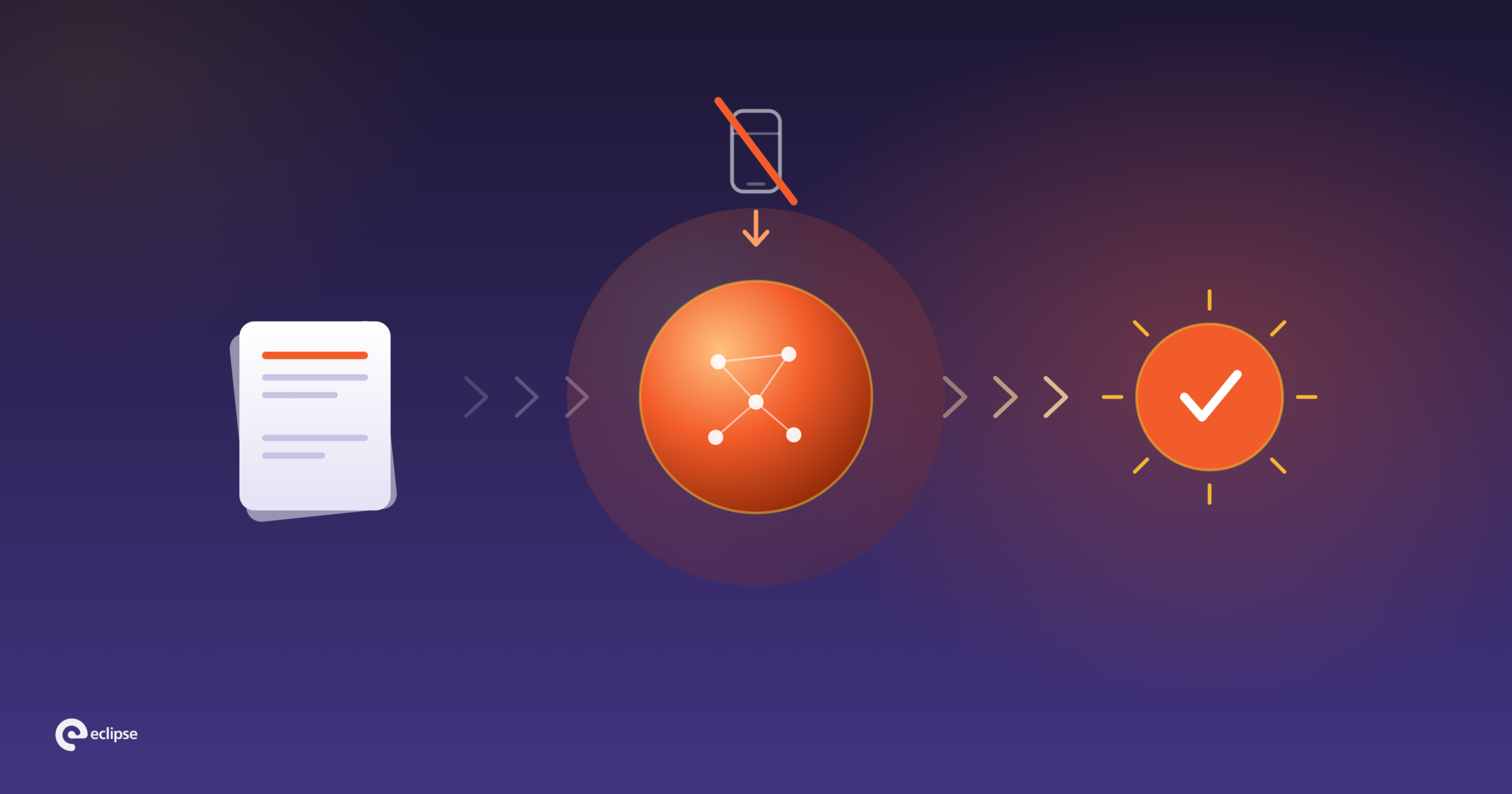
AI-driven communication does not replace human judgment in claims handling. What it does is remove the gap between what the claims system knows and what the customer hears. When a claim is logged, updated, or settled, that event can now trigger an intelligent communication automatically, personalised to that customer, delivered via their preferred channel, and written in language that reflects where they are in their journey.

For a customer who has just had a car accident, that might mean an immediate SMS acknowledgement while they are still at the roadside, followed by a WhatsApp message with a direct link to upload photos, followed by an email summarising next steps once the claim is registered. None of that requires a human to compose each message. All of it requires a platform that can connect real-time claims data to a communication engine capable of orchestrating across channels.

Eclipse CCMaaS does this through a combination of scenario management and a Canonical Data Model. The data model normalises information from policy administration systems, CRMs, and claims platforms into a single, enriched layer that the communication engine can access at the point of generating each message. The scenario management layer, which is set up and controlled entirely by business users, then automatically determines what to send, when, and how, based on the event that has occurred and the customer’s known preferences. In other words, the technology executes the communication, but the rules it follows are always defined and owned by a person.

Compliance Is Not Optional in Insurance Communication

One of the things that makes insurance communication uniquely challenging is the regulatory environment. Every customer-facing document touches on contractual obligations, regulated disclosures, and often vulnerable customer considerations. Personalisation is desirable, but not if it introduces compliance risk.

This is exactly where many AI communication projects stall. Insurers want to personalise, but their legal and compliance teams are understandably cautious about AI generating free-form text that has not been reviewed and approved. The resolution is not to abandon personalisation, but to design the system so that personalisation happens within a framework of approved content.

Eclipse’s approach uses master templates and conditional text blocks that are reviewed and signed off by compliance teams in advance. AI-driven communication then assembles the right approved templates for each customer context, rather than generating new text from scratch. The customer receives a message that feels personal and relevant. The compliance team knows that every word in that message came from an approved library. And the audit trail is complete, traceable, and available in real time via the management dashboard.

Eclipse CCMaaS is certified to ISO 27001, SOC2 Type 2, GDPR, and FSQS-NL. These are not certifications that clients need to achieve on top of the platform. They are native to it, meaning every communication that flows through Eclipse inherits those compliance properties automatically.

Personalisation and compliance are not competing objectives in a well-designed CCM platform. They are the same objective, achieved through the same architecture.

The Contact Centre Relationship

There is a direct and measurable connection between the quality of proactive communication and the volume of inbound contact centre calls. When customers know what is happening with their claim, when they receive updates at the moments that matter, and when those updates arrive via the channels they actually use, they do not need to call.

Insurers who have moved to proactive, AI-orchestrated claims communication consistently report significant reductions in avoidable inbound contact. The contact centre does not disappear. But it shifts from handling basic status queries to handling the genuinely complex interactions that require human judgment, which is where it adds the most value.

The commercial case is straightforward. Every avoidable call costs money. Every call that is replaced by a well-timed, informative proactive message is a cost reduction that also improves the customer experience. The two objectives, lower cost and higher satisfaction, align in a way that is rare in insurance operations.

Beyond Claims: The Whole Policy Lifecycle

The same architecture that transforms claims communication can be applied across the entire insurance customer lifecycle. Renewal communications that carry contextual, data-driven prompts based on a customer’s product usage. Onboarding sequences that guide a new policyholder through their cover in the channels they prefer. Mid-term adjustment confirmations that are generated and delivered automatically when a change is made to a policy.

Eclipse CCMaaS includes more than thirty pre-built communication scenario modules that cover the full range of customer events. Insurers do not need to build these from scratch. They configure and deploy on top of an architecture that has already been proven at scale, by organisations like Vattenfall, PostNL, and the Dutch Social Insurance Bank, processing hundreds of millions of communications per year.

The question for insurance communicators in 2026 is not whether AI-driven communication is relevant to their business. It is whether they have a platform capable of delivering it at the scale and compliance standard their customers and regulators expect. You can also read more about how the Eclipse CCMaaS model works in practice, or explore how Eclipse has been recognised by Aspire as a leader in scalable CCM.

Ready to See What CCMaaS Looks Like at Scale?

Book a personalised demo with the Eclipse team and explore what’s possible for your organisation.
Request a Demo

5 Signs Your Legacy CCM Platform Is Silently Costing You Customers


Sunday, Jul 5th 2026

Legacy CCM platforms rarely fail dramatically. They don’t crash at peak load or refuse to send a single email. Instead they fail quietly a template that couldn’t be updated in time, a channel your customer wanted but you couldn’t reach, a compliant communication that arrived three weeks too late to matter. The cost accumulates in churn, in contact centre queues, in revenue that never materialised.

If your organisation has been running on the same CCM platform for several years, these five warning signs are worth examining honestly. Each one is a symptom. Together, they’re a diagnosis.

SIGN #1: Your IT team is the bottleneck for every communication change

If updating a template, adding a new field to a document, or launching a new communication scenario requires raising an IT ticket and that ticket takes weeks to reach production your platform is actively slowing your business down. On traditional CCM platforms, the typical journey from IT ticket to production is 6–10 weeks.

Consider what that means in practice: a regulatory change requires updated customer communications. A product launch needs a new onboarding sequence. A complaint spike needs a proactive outreach campaign. Every one of these moments is delayed by a queue your business cannot control.

The hidden cost: Slower regulatory response, missed revenue moments, and business teams that have stopped trying to improve communications because the process is too slow.

SIGN #2: Customers are calling about communications they should have received proactively

If your contact centre regularly fields calls about status updates, billing queries, or policy changes that could have been communicated proactively your CCM platform is generating inbound volume rather than deflecting it.

Eclipse clients running proactive, personalised communication programmes report a 25–35% reduction in contact centre call volume. That’s not a marginal efficiency gain. For any large-scale operation, it represents a significant operational cost and a significant customer experience gap.

The hidden cost: Inflated contact centre costs, lower customer satisfaction scores, and a support team handling queries that a better CCM platform would have made unnecessary.

SIGN #3: You can only reach customers on the channels your platform supports not the ones they prefer

If your CCM platform was built when email and print were the primary channels, it was probably not designed for WhatsApp, push notifications, or government message portals like Berichtenbox. Adding these channels means bolting on third-party vendors and accepting that channel coherence is structurally impossible.

Modern customers don’t separate channels. A customer who receives a bill by post but needs to follow up via WhatsApp expects a coherent experience. A legacy platform that can’t connect those touchpoints delivers fragmentation and fragmentation damages trust.

The hidden cost: Lower engagement rates on critical communications, missed channel preferences, and a disjointed customer journey that erodes loyalty over time.

SIGN #4: Every invoice, statement, or alert is a missed revenue opportunity

Transactional communications invoices, statements, renewal notices, payment confirmations have open rates that marketing emails can only dream of. If your platform sends these as static, generic documents, you are leaving significant revenue untouched on every send.

A modern CCMaaS platform dynamically embeds contextual, data-driven offers into transactional communications at the point of delivery. Organisations making this shift report a 15–25% increase in revenue from contextual offers alone.

The hidden cost: Revenue that your transactional communication volume could be generating every month, every batch, every send but isn’t.

SIGN #5: You can’t answer basic questions about your communication performance

How many communications were delivered successfully in the last batch? Which channel had the highest bounce rate? When did a specific customer last receive a specific document? If answering these questions requires accessing back-end systems or calling a vendor’s professional services team your platform lacks operational transparency.

A mature CCM platform provides a native Control Tower: a real-time 360° view across all channels, batches, delivery status, and SLAs. Not a separate reporting module. A live operational view that puts your team in control without IT involvement.

The hidden cost: Compliance exposure from incomplete audit trails, slow incident response, and operational teams flying blind on communications that are critical to your business.

“The damage a legacy CCM platform does is rarely dramatic. It’s the sum of a thousand small delays, missed moments, and unreached customers — accumulated over years.”

The Benchmark: What a Modern CCM Platform Delivers

The five signs above are not inevitable features of CCM. They are features of legacy CCM. Modern managed SaaS platforms have eliminated each of them — not through incremental improvement, but through architectural redesign.

70–90%

Faster time-to-market for new communications

25–35%

Reduction in contact centre call volume

20–35%

Lower operational costs from automation

Warning Sign Legacy Platform Eclipse CCMaaS
Template changes 6–10 week IT ticket-to-production cycle Business users make changes in days with Eclipse CCMAAS
Contact centre volume Reactive comms generate avoidable inbound calls 25–35% call reduction via proactive omnichannel
Channel reach Email + print; new channels = separate vendors Native email, SMS, WhatsApp, post, push, Berichtenbox
Revenue per send Static transactional documents, no contextual offers 15–25% revenue uplift via embedded data-driven offers
Operational visibility Back-end access or PS engagement required Live Control Tower — real-time 360° view, no IT needed
Go-live timeline 6–12 months for a new implementation 4–6 weeks via Hosted Managed Service

Why Eclipse CCMaaS Addresses All Five

Eclipse Group has spent over a decade building a CCMaaS platform specifically designed for enterprises that have outgrown legacy output management. With deep specialist expertise in Output Management and CCM, over 700 million communications delivered in 2025, and a client base that includes Vattenfall,customer base that includes the region’s largest energy & utility companies as well as government bodies., and the Dutch Social Security Bank Eclipse operates at the scale where these warning signs have real consequences.

HOW ECLIPSE RESOLVES EACH WARNING SIGN

→ IT bottleneck: FlexForms gives business users full drag-and-drop control zero IT dependency for template and content changes

→ Contact centre load: Scenario Management with 30+ native modules enables proactive, automated communication across every customer event

→ Channel limitations: Native omnichannel delivery email, SMS, WhatsApp, push, post, Berichtenbox — managed from a single platform

→ Revenue leakage: Canonical Data Model integrates ERP/CRM data to power contextual offers dynamically embedded in every transactional communication

→ Visibility gaps: Native Control Tower provides real-time 360° view across all channels, batches, and SLAs — no separate tooling required

→ Compliance: ISO 27001, SOC2 Type 2, GDPR, FSQS-NL — full auditability and compliance-by-design baked into the platform

Is It Time for a Platform Audit?

If one or two of the five signs above resonated, the problem may be fixable within your current platform. If three or more felt familiar, the underlying architecture is likely the issue and incremental fixes will only address the symptoms, not the cause.

The organisations that have made the move to Eclipse CCMaaS consistently report that the cost of migration was significantly lower than the ongoing cost of staying put. Not just in money but in customer experience, regulatory exposure, team morale, and revenue that was quietly not being generated on every batch run.

Recognise Any of These Signs? Book a no-obligation platform review with the Eclipse team and let’s diagnose what your CCM stack is actually costing you.

Ready to See What CCMaaS Looks Like at Scale?

Book a personalised demo with the Eclipse team and explore what’s possible for your organisation.

Request a Demo

Why Enterprises Are Investing in CCM Platforms in 2026


Monday, Jun 15th 2026

Not long ago, “customer communication management” meant print runs, batch mail, and a shared inbox. It was a cost centre something to keep running, not something to invest in. That framing has fundamentally changed.

In 2026, enterprises across utilities, financial services, logistics, and the public sector are actively increasing budget allocation for CCM platforms.  The reasons are structural, not cyclical — driven by shifting customer expectations, tightening regulation, the commercial imperative of personalisation at scale, and a growing recognition that how you communicate is inseparable from how you compete. 

15–30%

Higher conversion & loyalty from personalised omnichannel journeys

25–35%

Reduction in contact centre calls via proactive comms

100%

Auditability & compliance-by-design

The Four Forces Driving CCM Investment in 2026

01

Customers Expect Personalisation Everywhere

Generic batch communications no longer meet baseline expectations. Customers expect messages that are relevant, timely, and delivered on their preferred channel.

02

Regulatory Complexity Is Only Growing

GDPR, WCAG accessibility mandates, sector-specific financial regulations, and public sector compliance requirements mean communication must be governed and fully auditable by design.

03

Omnichannel Is Now a Baseline, Not a Differentiator

Email alone isn’t enough. Enterprises need to reach customers via WhatsApp, SMS, push notifications, registered mail, and digital government portals  coherently and at scale.

04

The Cost of IT Bottlenecks Has Become Visible

Organisations that rely on IT for every template change or channel addition are now quantifying the delay  and the budget impact of slow, expensive change cycles is no longer tolerable.

From Cost Centre to Revenue Engine

One of the most significant mindset shifts happening in enterprise CCM investment is the move from viewing communication as pure cost to recognising it as a revenue-generating touchpoint. Every invoice, statement, alert, or onboarding message is a moment of customer engagement. Forward-thinking enterprises are using those moments deliberately.

“Every customer touchpoint  from a utility bill to a policy renewal notice  is an opportunity. Enterprises that treat transactional communications as revenue moments are seeing 15–25% increases in contextual offer conversion.”

Eclipse CCMaaS enables exactly this: contextual, data-driven offers dynamically embedded into transactional communications at the point of delivery. A statement becomes a cross-sell. An alert becomes a retention moment. A renewal notice becomes a loyalty driver.

This is only possible when the CCM platform has deep integration with customer data not a siloed document output engine, but a platform that speaks fluently to your ERP, CRM, and CDP, normalising that data into communications that feel genuinely personal.

What Enterprises Actually Need from a CCM Platform in 2026

The investment conversation has shifted from “can it send communications?” to “can it do all of this, at scale, without us rebuilding our IT stack around it?”

1

True Omnichannel – Not Bolt-On

Email, SMS, WhatsApp, post, push notifications, and government message portals like MijnOverheid – all from one platform, managed in one place. Not separate vendor relationships stitched together.

2

Business User Empowerment

Marketing, operations, and compliance teams need to manage communication content and scenarios without raising IT tickets. Platforms that keep business users dependent on engineering create a permanent bottleneck on agility.

3

A/B Testing and Real-Time Measurement

Communication effectiveness must be measurable. Enterprises are demanding automatic A/B testing at the scenario level, channel preference management, NPS integration, and live dashboards that show delivery performance across every batch and touchpoint.

4

Compliance Built In, Not Bolted On

ISO 27001, SOC2 Type 2, GDPR, FSQS-NL – in regulated sectors, these aren’t optional extras. The platform itself must carry these certifications, not just the infrastructure it runs on.

5

Scalability Without Surprises

Peak volumes  remediation batches, regulatory mailings, seasonal surges – cannot be exceptions that require emergency infrastructure. Enterprise CCM must handle millions of messages per day as a matter of routine.

6

Transparent, Predictable Pricing

The era of opaque licence-plus-professional-services pricing is ending. Enterprises want pay-per-use models with one invoice – no hidden costs, no surprise PS engagements every time something needs to change.

The Aspire Recognition: Independent Validation

Investeringsbeslissingen van ondernemingen op het gebied van CCM worden in toenemende mate gebaseerd op onafhankelijk analistenonderzoek, en niet louter op beweringen van leveranciers. Aspire CCS – een van de toonaangevende analistenbureaus die zich op CCM richten – heeft Eclipse Group erkend als marktleider op het gebied van schaalbare en veilige CCM-oplossingen voor de Benelux-markt.

“In order to meet consumer demand for ongoing personalised and relevant conversations across their chosen channels, organisations must select a communications transformation partner that will help them stay ahead of a rapidly evolving market.”

-Aspire CCS

That framing matters because it repositions the CCM platform selection from a technology procurement decision to a strategic partnership choice. The platform you choose determines not just how you communicate today, but how quickly you can respond to new channels, new regulations, and new customer behaviours tomorrow.

Eclipse CCMaaS: Built for Enterprise Demands

Eclipse Group has been delivering Customer Communication Management as a Service since its founding in the Netherlands, and today operates with 80 specialists dedicated exclusively to CCM and output management. With over 500 million communications delivered in 2025, Eclipse operates at genuine enterprise scale.

What the Eclipse Platform Delivers

  • ✓ End-to-end SaaS – data to delivery in one platform
  • ✓ Omnichannel: email, SMS, WhatsApp, post, push, Berichtenbox
  • ✓ FlexForms – business-user owned, no IT dependency
  • ✓ 30+ pre-built communication scenario modules
  • ✓ Canonical Data Model – ERP/CRM integration in days
  • ✓ Live Control Tower – real-time operational oversight
  • ✓ ISO 27001, SOC2 Type 2, GDPR, FSQS-NL certified
  • ✓ A/B testing, NPS, channel preference management
  • ✓ Scales to millions of messages per day
  • ✓ Pay-per-use pricing – one transparent invoice

Trusted by Enterprises Across Europe

The proof of enterprise-readiness is in the client base. Eclipse’s platform is used by some of the largest and most complex organisations in Europe across utilities, logistics, financial services, and the public sector.

Vattenfall
PostNL
Social Insurance Bank (SVB)
Vitens
DAF
KLM
PWN
Evides

These organisations are using Eclipse to manage critical customer-facing communication at scale  and the platform’s reliability, compliance posture, and operational depth are what make that possible.

The Investment Calculus Is Clear

When you map the drivers of enterprise CCM investment against what a mature platform like Eclipse CCMaaS delivers, the ROI calculus becomes straightforward.

25–35%

Reduction in contact centre calls

70–90%

Improvement in time-to-market

20–35%

Reduction in operational costs

15–25%

Uplift in revenue from personalised offers

These are not projections. They are outcomes reported by organisations already running on CCMaaS at enterprise scale.

The question for 2026 is not whether to invest in a CCM platform. The question is whether your current platform is genuinely built to deliver at the level your customers, your regulator, and your board now expect.

Ready to See What CCMaaS Looks Like at Scale?

Book a personalised demo with the Eclipse team and explore what’s possible for your organisation.

Request a Demo

Why Your CCM Implementation Is Taking 12 Months And How to Cut It to 6 Weeks


Monday, Jun 15th 2026
Why Your CCM Implementation Is Taking 12 Months — And How to Cut It to 6 Weeks

You had a plan. A timeline. A business case that made perfect sense on paper. And yet, here you are eight, nine, twelve months into a Customer Communication Management rollout still waiting for go-live. Still fielding questions from the business. Still watching the budget creep.

This is not an unusual story. It is, in fact, the default story for organisations that implement traditional CCM platforms. The question worth asking is: why does it keep happening, and more importantly, does it have to?

6–12 months
Typical go-live for traditional CCM platforms
4–6 weeks
Go-live with Eclipse CCMaaS Hosted Managed Service

The Hidden Architecture of a Slow Implementation

When organisations select a traditional CCM platform, they are buying a licence  not a solution. The platform arrives without pre-built infrastructure, without pre-integrated channels, and without an opinionated view of how your data should flow. Every connection to your ERP, CRM, or mainframe is a bespoke project. Every channel integration is a sprint. Every release is owned entirely by your internal IT team.

The result is a project that expands to fill whatever time is available and then some. Teams spend months on data mapping, environment setup, integration testing, and compliance sign-off before a single communication reaches a customer.

“Traditional CCM gives you a licence. A managed SaaS model gives you a working system. The difference is where the complexity lives  and who carries it.”

The Five Reasons Projects Overrun

1. Data Integration Is Built from Scratch Every Time

Legacy platforms require custom field mapping for every source system. There is no standardised integration model meaning your SAP instance, your Salesforce CRM, and your mainframe are each a separate integration project. The data transformation work alone can consume months of senior technical resource.

2. The SaaS Licence Doesn’t Include the Infrastructure

Many “SaaS” CCM vendors sell a licence, then leave clients to build integrations, manage infrastructure, and own every release cycle. The operational responsibility never actually transfers. IT remains the bottleneck at every stage.

3. Business Users Are Locked Out

In most traditional deployments, updating a template or launching a new communication scenario means raising an IT ticket and waiting six to ten weeks for production. Business teams have the ideas; they just have no way to execute without engineering support. This creates a constant drag on time-to-market.

4. Advanced Scenarios Require Additional Build

Core document composition is often strong in legacy platforms  but the moment you need multi-step orchestration, A/B testing, real-time channel switching, or integrated payment flows, you are in custom build territory again. Each capability is a project, not a feature.

5. Operational Oversight Requires Back-End Access

Pausing a batch, rerouting a failed delivery, or monitoring live communication volumes are not self-service actions in most legacy systems. They require back-end access or professional services engagement adding cost and delay to what should be routine operations.

The Managed SaaS Model: A Different Starting Point

Eclipse CCMaaS is built on a Hosted Managed Service (HMS) model which means the infrastructure, integrations, and operational layer come pre-built. When a client engages Eclipse, the starting point is not a blank canvas. It is a working platform with pre-integrated channels, a standardised data layer, and thirty-plus pre-built communication modules ready to configure.

Dimension Eclipse CCMaaS Traditional CCM Platforms
Data Integration Canonical Data Model- connects any ERP/CRM in days Custom field mapping per project; no standardised model
Go-Live Timeline 4-6 weeks via Hosted Managed Service Typically 6-12 months
Business User Control Drag-and-drop FlexForms; zero IT dependency IT involvement required for most updates
Communication Scenarios 30+ native modules: batch, on-demand, A/B, WhatsApp, iDEAL Core composition only; advanced flows require custom build
Change Agility Regulatory or content changes in days IT ticket-to-production: 6-10 weeks
Operational Oversight Live Control Tower – monitor, pause, reroute without IT Requires back-end access or professional services
Pricing Transparent pay-per-use – one invoice, no hidden PS costs Licence + PS for every change + separate support tier

The architectural difference is significant. Eclipse’s Canonical Data Model (CDM) acts as a vendor-agnostic, normalised data layer – meaning the platform connects fluently to SAP, Salesforce, IBM mainframes, and virtually any other source system without bespoke transformation work. Integrations that take weeks on traditional platforms take days on CCMaaS.

What 6 Weeks Actually Gets You

A six-week go-live is not a shortcut. It is a reflection of where the complexity has already been absorbed. Eclipse has pre-built the infrastructure, pre-integrated the channels, and pre-configured the onboarding process so that client effort is focused on configuration and content not plumbing.

What you get from day one (and beyond):

  1. Omnichannel delivery: email, SMS, WhatsApp, post, push notifications
  2. Batch & on-demand communication modes
  3. Pre-integrated ERP, CRM & mainframe connectors
  4. Live Management Dashboard & Control Tower
  5. ISO 27001, SOC2 Type 2, GDPR & FSQS-NL compliance
  6. FlexForms-business-user owned, drag-and-drop
  7. A/B testing & channel preference management
  8. Scenario management with 30+ native modules

And that’s just the starting point additional channels, modules, and integrations can be added as your needs grow.

The Business Case Beyond Speed

Time-to-value is the headline, but the downstream impact of a managed SaaS model extends well beyond the implementation phase. Organisations running on Eclipse CCMaaS consistently report measurable improvements across operational and commercial metrics.

70-90%

Faster Time-to-Market

Launch new communications in days instead of months with cloud-native templates and pre-built workflows.

25-35%

Fewer Contact Centre Calls

Proactive, personalised communications and automated status updates deflect avoidable inbound calls.

25-35%

Lower Operational Costs

Higher digital adoption, reduced print and postage, and automated BAU processes cut ongoing overhead.

15-25%

Revenue Uplift

Contextual, data-driven offers embedded into transactional comms turn every touchpoint into a revenue moment.

Is a 12-Month Timeline Inevitable?

No. But it is the natural outcome of a model where the client inherits all of the complexity. When you buy a licence and build everything yourself, twelve months is optimistic. When you engage a platform that has already absorbed that complexity pre-built, pre-integrated, compliance-ready six weeks is not ambitious. It is the standard.

The organisations that have made this shift  including major utilities, financial services firms, and public sector bodies across Europe are not just going live faster. They are changing communications in days when legislation shifts, empowering business users who previously waited months for IT, and scaling to millions of messages without operational drama.

“The question is not whether a faster implementation is possible. It’s whether you’re working with a platform designed to deliver it.”

Eclipse Group delivered over 500 million communications in 2025 across email, WhatsApp, SMS, registered mail, and push notifications on behalf of clients including Vattenfall, PostNL, the Social Insurance Bank, and Vitens. That scale is not accidental. It is the result of an architecture built for exactly this kind of operational demand.

If your current CCM implementation has been running longer than it should, or you’re scoping a new programme and wondering whether the 12-month timeline is inevitable it isn’t. The model has changed. The question is whether your platform has.

If you are ready to move beyond fragmented tools and take control of your customer communication chain, Eclipse is ready to help. Book a personalised demo and see how our CCM as a Service platform works end-to-end, with your use cases at the centre

“Most customers are up and running within 4–6 weeks. However, implementation timelines vary depending on your existing communications environment, the size of your organization, and the complexity of your requirements. Following an initial assessment, we’ll provide a more accurate implementation timeline tailored to your business.”

The Impact of Modern CCM Solutions on Operational Efficiency


Wednesday, May 27th 2026

For many organisations, managing customer communications remains one of the most fragmented and labour intensive aspects of daily operations but it doesn’t have to be.

Dozens of templates maintained across different systems, approval workflows that slow every campaign, and IT teams fielding requests for every content update these are not exceptional circumstances. They are, in many sectors, entirely normalised. At Eclipse, we built our CCM platform specifically to change that.

The Hidden Costs of Legacy Communication Workflows

Before examining what our CCM as a Service platform delivers, it is worth pausing to consider what the absence of a modern CCM solution typically costs an organisation.

In a fragmented communication environment, inefficiencies accumulate quietly across departments. A communications team that cannot update a template without raising an IT request. A compliance officer manually reviewing dozens of document variants before a regulatory deadline. A print and mailing operation with no automated fallback when a postal address is undeliverable. Each of these friction points represents wasted time, elevated risk, and a slower response to change.

Operational inefficiency in customer communications rarely announces itself loudly. It accumulates in delayed campaigns, manual workarounds, compliance anxieties, and IT backlogs that never quite clear.

Organisations that have migrated to our platform consistently tell us that the inefficiencies they had normalised were, in fact, entirely addressable. The gains were not incremental they were structural.

Automated Scenario Management: Removing Manual Effort from Routine Communications

One of the most transformative capabilities of our platform is automated scenario management. Once a communication scenario has been configured which customers receive which message, via which channel, under which conditions our platform executes it consistently and at scale, without manual intervention.

Consider a financial services provider issuing monthly account statements to hundreds of thousands of customers. Without automation, producing, personalising, and distributing these documents is a significant operational undertaking. With our scenario management module in place, the entire process runs as a governed workflow: data feeds in, documents are generated and personalised, channels are selected based on individual customer preferences, and delivery is logged all without a team managing each step by hand.

The efficiency gains extend beyond cost reduction alone. Automation reduces the risk of human error, ensures communications are sent on schedule, and produces a consistent audit trail that supports both internal quality assurance and external regulatory review.

Empowering Business Users and Reducing IT Dependency

One of the most significant and often underestimated efficiency gains our platform delivers is the shift of content ownership from IT to the business.

In many organisations, updating a communication template requires submitting an IT request, waiting for developer availability, and then waiting again for testing and deployment. For urgent changes driven by regulatory requirements or market events, this timeline is unsustainable. Our content and template management module addresses this directly.

Business users whether in communications, compliance, or product management can create and update templates, text fragments, and content blocks within a governed, role based workspace. Access controls ensure each user can only modify what they are authorised to change. Approval workflows ensure that sensitive communications are reviewed before publication. The result is faster time to market for communication updates, a meaningfully lighter IT workload, and a content process that keeps pace with the speed of business.

This is what we mean when we refer to our platform as an end-to-end solution it does not simply automate the production stage; it restructures the entire workflow from authoring to delivery.

Centralised Data Integration: The End of Siloed Communication

Operational efficiency in customer communication depends, fundamentally, on the quality and accessibility of customer data. In most organisations, that data is distributed across multiple source systems: CRM platforms, ERP tools, billing databases, policy administration tools, and third party data providers.

Our integration module connects to all relevant source systems and consolidates data into a structured, standardised format our Canonical Data Model (CDM) that feeds consistently into every communication output. This eliminates the manual data handling that plagues many communication workflows: the spreadsheet exports, the address cleansing runs, the manual enrichment steps that introduce delay and risk at every juncture.

When data flows reliably and accurately into our platform, the quality of every message improves. Personalisation is more precise, errors are fewer, and the risk of sending outdated or incorrect information to customers is substantially reduced. The operational and reputational value of this is considerable.

Compliance and Audit Readiness Built into the Architecture

For organisations in regulated industries, compliance is not a periodic concern it is a constant operational requirement. Every communication must be produced in accordance with applicable regulations, retained for a defined period, and retrievable on demand.

Our platform builds these requirements into the architecture itself. Audit trails are generated automatically for every communication produced and distributed. Data protection controls including encryption, access logging, and consent management are configured at the platform level. Our insights module gives compliance officers the visibility they need to demonstrate adherence to regulatory standards in near real time, rather than through retrospective manual review.

Our ISO 27001 certification and GDPR compliant architecture are not simply reassurances for procurement teams they are foundations for an operational model where compliance does not create bottlenecks.

Audit preparation, which previously required significant manual effort to retrieve and compile communication records, becomes a straightforward reporting exercise when your entire communication chain runs through a single, governed platform.

Operational Gains Our Customers Report

The efficiency gains described above are not theoretical. Organisations that have moved to our CCM as a Service platform report consistent improvements across several operational dimensions:

  1. Reduced time to market for new communication campaigns and template updates often from weeks to days
  2. Lower operational costs through automation of previously manual production and distribution tasks
  3. Significant reduction in IT workload related to content management and communication infrastructure
  4. Improved first time delivery rates, with automated channel fallback reducing returned and undeliverable messages
  5. Greater compliance confidence, with complete audit trails and consistent application of approved, governed content

The commercial model reinforces these gains. Our pay per use SaaS pricing means organisations are never paying for capacity they do not use. There is no large upfront investment, and efficiency benefits begin to accrue from go live not months later once infrastructure has been built and configured.

Eclipse as an Operational Partner Not Just a Software Vendor

The efficiency potential of a CCM platform is only fully realised when the technology is accompanied by genuine expertise in communication processes and platform management. That is why Eclipse does not operate as a traditional software vendor we act as an operational partner, hence CCM as a Service.

Our team takes responsibility for platform availability, performance, and ongoing optimisation. We work with your teams to design communication scenarios, improve data flows, and identify new efficiency opportunities as your business evolves. This model, detailed on our services pages, shifts operational responsibility away from your IT and communications departments  freeing them to focus on the strategic and creative work that genuinely requires their expertise.

Clients describe this as one of the most tangible differences between working with Eclipse and working with a conventional software provider: we are not handing over a product and stepping back. We are taking the complexity off your plate so your team can focus on what they do best, without the distraction of managing communication infrastructure.

Conclusion

The operational case for a modern CCM platform is straightforward: organisations managing high volumes of customer communications through fragmented, manual, or legacy systems are carrying an unnecessary burden. The technology to automate the routine, empower business users, integrate data sources, and build compliance into the architecture already exists and at Eclipse, we deliver it as a fully managed service.

The organisations that act on this will not simply reduce costs. They will become more agile, more responsive, and better equipped to deliver the kind of consistent, personalised, and reliable communication that modern customers expect.

Ready to see our CCM as a Service platform in action? Request a Personalised Demonstration →

What is a CCM Platform?


Wednesday, May 20th 2026

Every day, organisations send millions of letters, invoices, policy documents, and notifications to their customers. Behind each of these touchpoints lies a critical question: how do you ensure that every message is accurate, personalised, compliant, and delivered through the right channel at exactly the right moment? At Eclipse, that is precisely the challenge we built our platform to solve.

What is Customer Communication Management?

Customer Communication Management (CCM) refers to the technology and processes an organisation uses to create, manage, and distribute high-volume, personalised communications across multiple channels, with each being optimally tailored to that specific client. In practice, this covers everything from transactional documents invoices, policy renewals, account statements to on-demand correspondence and regulatory notifications.

At Eclipse, we define CCM as a Service (CCMaaS) as far more than a software product it is a fully managed service. Alongside our technology, our team handles support tickets, proactively solves problems, and thinks alongside your organisation at every step, taking away the worries of managing complex communication infrastructure so you can focus on what matters most: your customers.

In practice, this means the cloud based creation, management, and fulfilment of personalised, omnichannel communications at scale, with Eclipse as your dedicated partner throughout. Our end-to-end CCM platform brings the entire communication chain into a single, centralised environment: from data integration and content creation, through scenario management and channel distribution, to delivery reporting and compliance audit trails.

Rather than relying on disparate tools spread across departments  a word processor here, an email marketing tool there, a print queue managed by IT our platform consolidates every step under one roof, giving your teams full control and full visibility.

A CCM platform does not simply send messages. It orchestrates the entire lifecycle of customer communication from the moment data enters the system to the moment a customer reads, signs, or responds.

The Core Modules of Our CCM Platform

To understand what a CCM platform delivers, it helps to look at its key functional components. Together, they form an integrated chain that takes raw data and turns it into personalised, compliant, omnichannel communication  automatically and at scale.

Data Integration

Customer data is often spread across multiple systems such as ERP, CRM, and policy platforms. Our solution leverages standardised REST APIs to seamlessly connect these systems and exchange data securely and efficiently.

All data is consolidated into a centralised Canonical Data Model (CDM), ensuring consistency, validation, and enrichment across every communication channel. Where standard integration is not feasible, our specialist team delivers tailored integrations across multiple data sources guaranteeing full connectivity in any landscape.

Result: faster implementation, lower integration complexity, and reliable, compliant customer communications.

Content and Template Management

Our content and template management environment empowers business users to create, edit, and manage communication templates including text fragments, headers, footers, images, and complete document layouts without relying on IT for every change.

All content components are managed as centralised resources under strict version control, ensuring consistency, full auditability, and reusability across all communications. Access controls and approval workflows guarantee that content is properly governed and compliant. The intuitive user interface is designed for non technical teams, enabling faster updates while maintaining full control over brand, compliance, and messaging.

Scenario Management

Perhaps the most powerful capability in our CCM platform is scenario management: the logic layer that determines how, when, and through which channel each communication is sent. A customer who has opted in to digital channels receives their invoice by e mail; another receives the same document by post. These journeys are configured once and executed automatically at any volume, without manual intervention.

Omnichannel Distribution

Our channel module handles distribution across all relevant communication channels from a single production engine: email, SMS, WhatsApp, print, secure digital portals, secure government messaging (e.g. Berichtenbox in NL), and more. Regardless of the channel, the content, branding, and personalisation remain consistent  because they originate from the same centralised platform.

Customer Journey Mapping

Our platform includes a Customer Journey Mapping module that allows organisations to visualise and monitor end-to-end communication journeys using live data. This provides realtime insight into how your communications are performing and where they can be improved. Read more in our article on moving from Customer Journey Mapping to Connected Journey Management.

Insights & Analytics

Our insights module provides real time visibility into communication performance, including usage volumes, delivery success rates, customer interactions, and A/B testing outcomes. Comprehensive dashboards and drill down capabilities enable organisations to monitor campaign effectiveness, track KPIs, and optimise customer journeys. All processes are fully logged, providing complete audit trails to support regulatory compliance and internal governance.

By combining operational data and communication feedback in a single view, the platform delivers actionable insights — empowering continuous improvement and eliminating the need for separate analytics tools.

CCM, CRM, and Marketing Automation: Understanding the Distinctions

For those new to the CCM category, it is natural to wonder how it relates to tools already in use, such as CRM systems or Marketing Automation platforms. The three are complementary but serve fundamentally different purposes and we explore this in detail in our dedicated article, How does a CCM platform relate to CRM and Marketing Automation?

In brief:

  1. A CRM system manages customer data and relationships.
  2. Marketing Automation supports lead generation and customer acquisition campaigns, primarily through e-mail and social media.
  3. CCM is focused on the ongoing, operational communication with existing customers the invoices, compliance notices, policy documents, and service notifications that must be delivered accurately and at scale.

Think of it this way: CRM holds the data, Marketing Automation wins the customer, and our CCM platform maintains the relationship through every communication that follows.

The three are most powerful in combination. With CRM as the data backbone, Marketing Automation managing acquisition campaigns, and our CCM platform handling all downstream transactional and operational communication, organisations gain a complete, coherent communication ecosystem.

Why CCM as a Service Makes the Difference

Our platform is delivered as a fully cloud based, managed SaaS solution CCM as a Service (CCMaaS) providing capabilities that on premise or hybrid deployments cannot match. Because the platform is fully managed by Eclipse Group, your organisation always benefits from the latest technology without upgrade cycles, migration projects, or the risks associated with outdated infrastructure. We take full responsibility for availability, performance, and security.

This includes adherence to leading industry standards, such as:

  1. ISO 27001 certification
  2. SOC 2 Type II compliance
  3. Fully GDPR compliant architecture

Our servers are based in the Netherlands, and all data remains there  no exposure to third country jurisdiction risk. For procurement teams in regulated Dutch industries navigating post Schrems II compliance requirements, this is not a footnote it is a core part of the value proposition.

The pay-per-use commercial model means your costs align directly with the volume of communications you send. There is no significant upfront investment, no licence fees tied to server counts, and no capacity to pay for before you need it. You can read more about our service model and what CCMaaS means in practice in our CCMaaS whitepaper.

Who Benefits from Our CCM Platform?

Our CCM platform is particularly well suited to organisations in sectors where communication volumes are high, documentation requirements are complex, and regulatory standards are demanding:

  1. Financial services and insurance — policy documents, statements, and compliance notices produced at scale and retained for audit.
  2. Utilities and telecommunications — invoicing, service notifications, and contract renewals delivered across preferred channels.
  3. Healthcare and government — time sensitive, legally significant communications where accuracy and accessibility are non negotiable.
  4. Retail and e-commerce — transactional and post purchase communication flows managed from a single platform.

That said, any organisation managing a significant volume of structured, personalised communications will find value in a dedicated CCM platform. If you are unsure where to begin, our services team is ready to help you map your communication landscape and identify the right starting point.

Conclusion

A CCM platform is not simply a document generation tool or a bulk messaging system. It is a strategic communication infrastructure that connects your customer data, your content, your workflows, and your channels into a single, manageable, and measurable chain. At Eclipse, we have built that infrastructure and we run it, manage it, and continuously improve it on your behalf.

As customer expectations rise and regulatory requirements become more demanding, the organisations that invest in purpose built CCM capability will be better placed to communicate with clarity, consistency, and confidence at whatever scale their business demands.

If you are ready to move beyond fragmented tools and take control of your customer communication chain, Eclipse is ready to help. Book a personalised demo and see how our CCM as a Service platform works end to end, with your use cases at the centre.